
METHOD AT A GLANCE
The numbers before you start
This is the operational baseline: heat, time, equipment, size, form, and batch discipline. Exact timing still moves with shrimp size, starting temperature, shell state, and appliance.
Set the cooking environment before shrimp enter it.
Use the clock to know when to start checking—not as permission to ignore the shrimp.
The right vessel makes temperature control easier.
Size changes the margin between surface result and an overcooked center.
Shell and processing state can materially change execution.
Batching is part of the method, not a cleanup detail.
THE METHOD ITSELF
How to nail grill
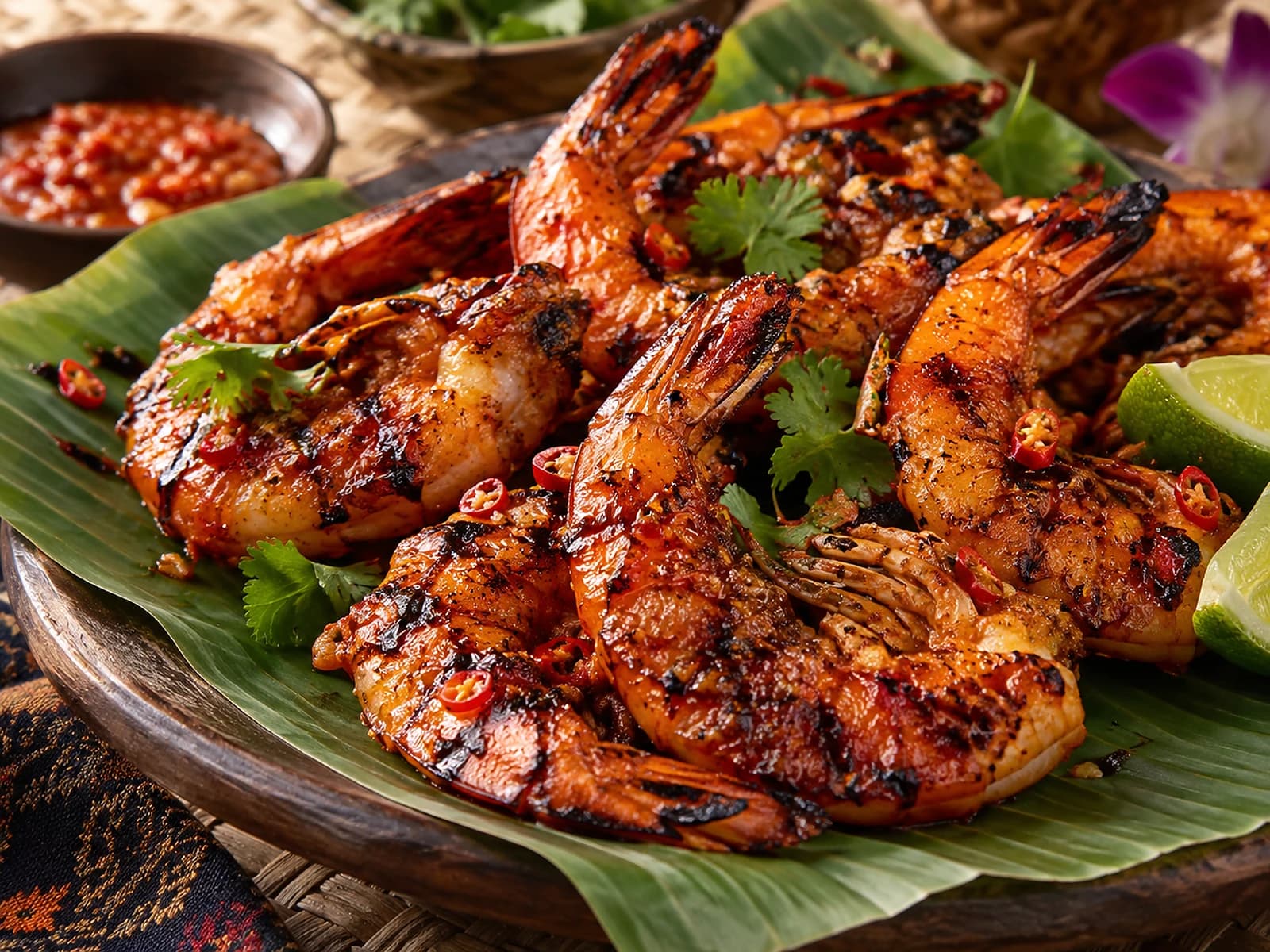
The grill is a high-gradient method. Size buys the time needed to develop smoke and char before the center is finished, so large shrimp are not just prettier—they are easier to cook well.
The direct-grill method
Preheat hard
Preheat the grill 10–15 minutes with a direct high-heat zone and a cooler escape zone. Clean the grate before the shrimp arrive.
Dry, then oil the shrimp
Pat the surface dry, season, and toss lightly with oil. Oil the food rather than flooding the grate; excess oil feeds flare-ups.
Make them controllable
Use two parallel skewers so the shrimp cannot spin, or a tight grill basket. Arrange each shrimp flat so the whole surface actually meets the heat.
Start over direct heat
Cook the first side until char marks appear and the underside is opaque at the edges—about 2 minutes for many 16/20–21/25 shrimp.
Flip once
Turn once and cook another 1–2 minutes, moving to the cooler zone if sugar, butter, or marinade starts to flare.
Baste late; acid later
Add butter or a sweet glaze only in the final 30–60 seconds. Finish with citrus or vinegar after the shrimp leave the grill so the bright aromatics stay fresh.
TIMING & DONENESS
Know when to stop
Flesh is opaque through the thickest section, still springy, and no longer glassy. For a thermometer-based safety check, use 145°F / 63°C.
Best showpiece size; use the cooler zone if the shell chars too fast.
A strong balance of browning time and tenderness.
Start checking at 90 seconds; grills vary dramatically.
What good looks like
TROUBLESHOOTING
Method-specific failure modes
These are the mistakes that belong to this cooking method—not another repetition of generic thawing advice.
Shrimp stick to the grate
The grate was dirty, the shrimp was wet, or you tried to move it before a crust formed.
Black outside, raw inside
The fire is too aggressive for the shrimp's size. Move to the cooler zone or use larger shrimp next time.
Dry before any char develops
The shrimp is too small, too wet, or too crowded for direct grilling. Skewer tightly and shorten the cook—or choose pan searing.
Recovery: If the shell is coloring faster than the center, move the shrimp to the cooler side, close the lid briefly, and finish with gentler indirect heat rather than leaving it over flame.
MAKE IT TONIGHT
Recipes that use grill
These published Playbooks are mapped to this method. Open a recipe for its ingredients, preparation and image details.
SPECIES INTERSECTION
Which shrimp fit this method?
Now that the technique is explicit, species fit has context. Good matches provide enough size, structure, or handling margin for this method; watch and avoid states stay visible.
PRODUCT INTERSECTION
Real bags that fit
These catalogue products clear the method recommendation. Product processing still has the final say, so each bag opens into its own full verdict.
PROCESSING INTERSECTION
Processing can change the answer
A species can be a good fit while a specific bag is not. These processing states are the ones the recommendation engine treats as relevant to this method.
Over-sulfited shrimp above roughly 100 ppm is described by the extension literature as translucent, glassy, plump, slippery and explicitly HARD TO COOK. That is a chemical-residue diagnosis, not a technique failure, and readers currently blame themselves for it. Note also that sulfite concentrates in the non-edible parts - whole samples run up to four times the level of edible parts - so it bears on whether the heads can be used for stock.
A treated shrimp still poaches, simmers and boils exactly as its group predicts - it simply weeps. But no species is firm enough or large enough to sear a crust through 5-25% added mobile water: the pan spends the entire ~100-second budget boiling off exudate at 100C and never reaches the 140C the surface needs. So for grill and pan_sear the state wins outright, and a Group A jumbo behaves worse than an untreated Group B shrimp would.
Hardness is an integral of time at temperature, and cook loss, shrinkage and hardness correlate at 97.8, 92.3 and 88.4 percent. Every reheat moves further up the same monotonic curve and nothing re-hydrates. The only technical route back is very prolonged braising, which softens via collagen-to-gelatin at the cost of everything else. DIRECT ANSWER to the brief's question: for a precooked salad-shrimp bag, Group B membership no longer decides anything about METHOD - R15 has decided all eight cells. What group membership still decides is flavour framing (what to dress it with) and the purchasing lesson (that raw-grade amaebi is a different product on the same shelf). Therefore the Use block must ask what STATE the bag is in BEFORE it asks what species it is.
WHY IT WORKS
The cooking logic underneath the method
The method page should teach a cook how to execute first. The science belongs here to explain the result, not to replace the methodology.
Grill, explained
Radiant heat from the fire browns quickly, but the center keeps heating after the surface looks finished. Larger shrimp create a wider time gap between exterior char and interior overcooking.