
Season the prawns
Toss the shrimp with 1/2 teaspoon turmeric and 1/2 teaspoon salt. Rest 10 minutes while you prepare the aromatics. If using shell-on shrimp, devein through the back but keep the shell intact.
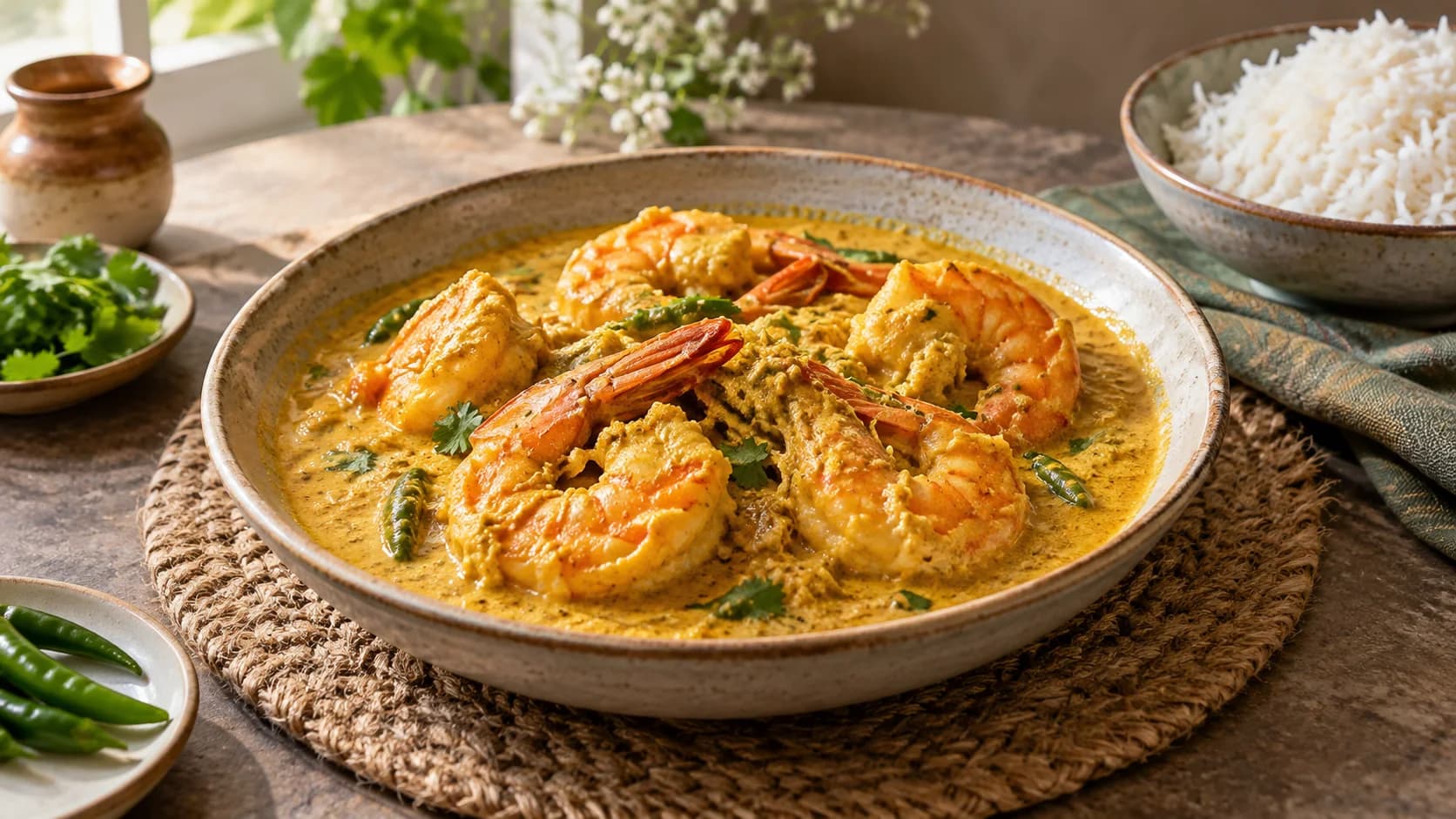
A silky Bengali coconut curry built around large prawns: perfume the fat, build the gravy first, then let the shrimp finish in it for only a few minutes.
Jump to RecipeAI-generated serving illustration. It is not a photograph of a tested batch or a doneness reference.
Toss the shrimp with 1/2 teaspoon turmeric and 1/2 teaspoon salt. Rest 10 minutes while you prepare the aromatics. If using shell-on shrimp, devein through the back but keep the shell intact.
Heat the mustard oil until shimmering, then lower the heat slightly. Sear the shrimp about 30 to 45 seconds per side, just until the shells perfume the oil and the edges begin to color. Remove immediately; they are nowhere near finished yet.
Add 1 tablespoon ghee to the same pan. Add green cardamom, cinnamon, cloves and bay leaf and cook about 30 to 45 seconds, until fragrant.
Add the onion paste and cook over medium-low heat 7 to 10 minutes, stirring often, until the raw smell is gone and the paste is pale golden. Add ginger and cook 1 minute. Stir in the remaining turmeric, Kashmiri chile, cumin and sugar.
Add the coconut milk and 1/2 teaspoon salt. Bring only to a gentle simmer and cook 6 to 8 minutes, stirring occasionally, until glossy and lightly thickened. Do not hard-boil the coconut milk.
Add the seared shrimp and green chiles. Simmer gently 2 to 4 minutes depending on size, just until the shrimp are opaque through the center. Turn off the heat immediately.
Stir in the finishing teaspoon of ghee and Bengali garam masala. Cover and rest 3 minutes, then taste for salt. Serve over hot rice with the prawns sitting on top of the sauce rather than buried in it.
OPTIONAL UPGRADE
Keep the core recipe clean, or flip this on for one or two high-impact upgrades.
Use these recipe-specific texture cues. Color and curl alone cannot establish safety; use a thermometer to check 145°F / 63°C at the thickest part for cooked shrimp.
The little details that make a big difference.
The shell protects the flesh during the brief sear and contributes shrimp flavor to the fat and curry.
The onion and coconut base needs time. The shrimp does not. Remove it early and return it only for the final few minutes.
Black tiger, whiteleg and Gulf white hold together better in an eaten sauce than delicate cold-water shrimp.
Coconut milk can split under aggressive heat, and the shrimp tightens long before the sauce improves.