
Make a peanut-butter roux
Melt the butter in a Dutch oven over medium-low. Whisk in the flour and cook, stirring constantly, 18 to 22 minutes until smooth, nutty and the color of peanut butter.
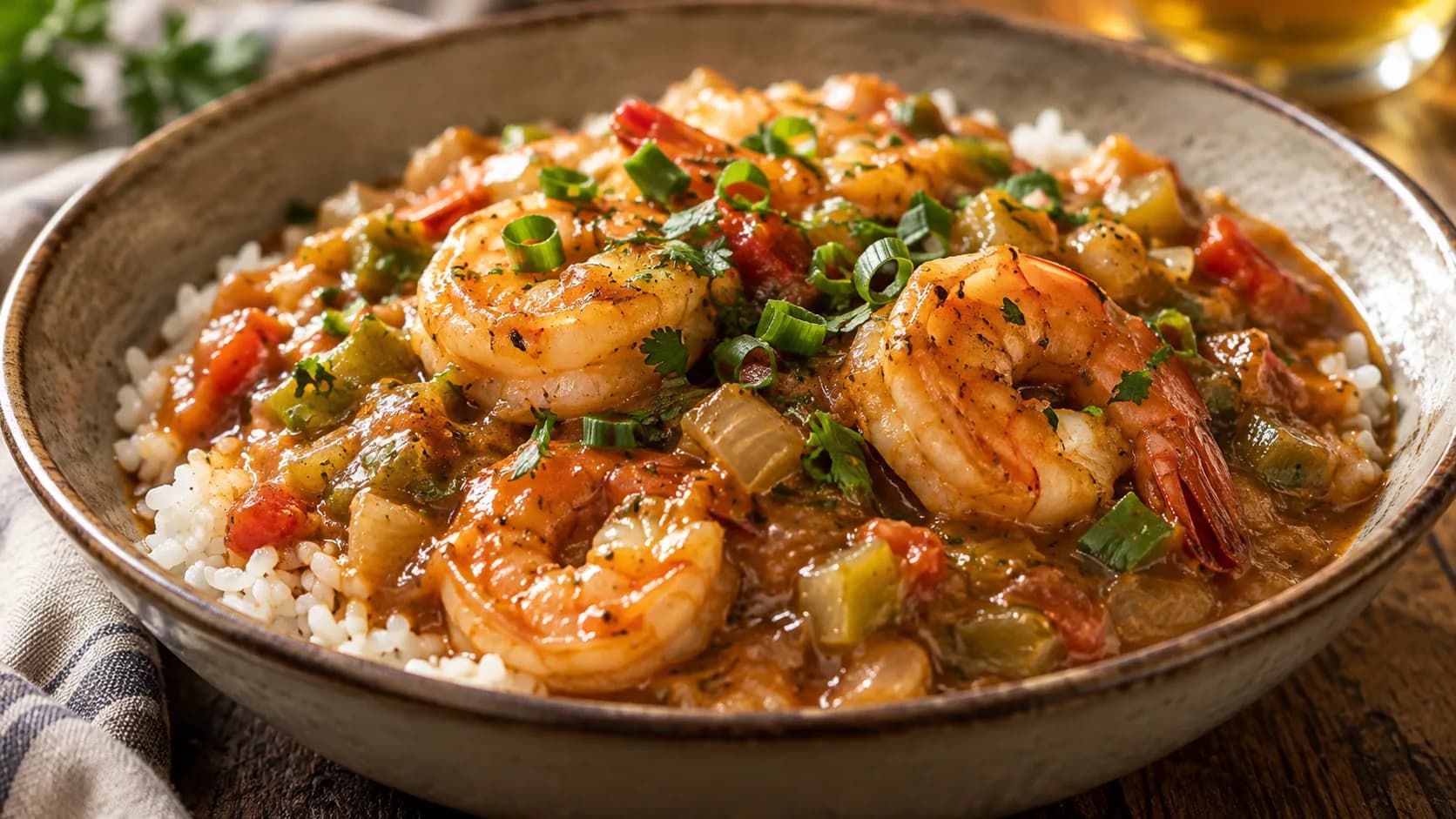
A nutty Louisiana roux, the trinity and shrimp-rich gravy — with the shrimp added only at the finish so the sauce gets its time without taking it from the meat.
Jump to RecipeAI-generated serving illustration. It is not a photograph of a tested batch or a doneness reference.
Melt the butter in a Dutch oven over medium-low. Whisk in the flour and cook, stirring constantly, 18 to 22 minutes until smooth, nutty and the color of peanut butter.
Add onion, bell pepper and celery. Cook 8 to 10 minutes until soft and glossy. Add garlic and tomato paste and cook 2 minutes.
Stir in paprika, cayenne and thyme for 30 seconds so the spices toast in the roux fat.
Gradually whisk in warm stock. Add bay leaves and bring to a gentle simmer. Cook uncovered 20 to 25 minutes until the gravy coats a spoon. Season to taste.
Lower the heat until the sauce barely bubbles. Add the shrimp and cook 3 to 4 minutes, stirring gently, just until opaque.
Remove from the heat. Stir in lemon juice, scallions and most of the parsley. Rest 3 minutes and taste again for salt and cayenne.
Spoon étouffée alongside hot rice and finish with the remaining parsley and scallions.
OPTIONAL UPGRADE
Keep the core recipe clean, or flip this on for one or two high-impact upgrades.
Use these recipe-specific texture cues. Color and curl alone cannot establish safety; use a thermometer to check 145°F / 63°C at the thickest part for cooked shrimp.
The little details that make a big difference.
Shrimp has no braise. Spend your long cook on the roux and vegetables, not the shrimp.
Big enough to stay distinct in a rich gravy, small enough to get shrimp in every bite.
Shell stock turns flour-and-butter gravy into shrimp étouffée.
Aggressive boiling tightens shrimp and can break the sauce.