

METHOD AT A GLANCE
The numbers before you start
This is the operational baseline: heat, time, equipment, size, form, and batch discipline. Exact timing still moves with shrimp size, starting temperature, shell state, and appliance.
Set the cooking environment before shrimp enter it.
Use the clock to know when to start checking—not as permission to ignore the shrimp.
The right vessel makes temperature control easier.
Size changes the margin between surface result and an overcooked center.
Shell and processing state can materially change execution.
Batching is part of the method, not a cleanup detail.
THE METHOD ITSELF
How to nail butter poach
Butter poaching replaces violent surface heat with a controlled bath. It is slower than searing but gives delicate shrimp a wider margin between raw and tough.
The stovetop butter-poach method
Build a stable butter bath
Warm 1–2 tablespoons of water in a small pan, then whisk in cold butter a few pieces at a time over low heat. Keep the mixture emulsified and below a simmer.
Set the temperature before adding shrimp
Aim for roughly 170–180°F / 77–82°C. If the butter is sizzling or browning hard, it is no longer a poach.
Add shrimp in one layer
Nestle the shrimp into the warm fat with room to turn. The bath does not need to bury every shrimp completely, but the lower surface should be surrounded by butter.
Turn once
Turn after the lower half becomes opaque. For 21/25 shrimp, that is often around the 2–3 minute mark.
Finish gently
Continue until the thick center is opaque and tender—commonly 4–6 minutes total for 21/25, longer for jumbo shrimp.
Keep the butter
Lift the shrimp out, season the butter with lemon, herbs, garlic, or wine reduction as the recipe allows, and use it as the sauce rather than discarding it.
TIMING & DONENESS
Know when to stop
Opaque through the thick end, tender and springy, with no hard seared crust. For a thermometer-based safety check, use 145°F / 63°C.
Large shrimp benefit most from the gentle gradient; turn once midway.
The best general starting point for a shallow butter bath.
Check early because the bath keeps working even after the burner is reduced.
What good looks like
TROUBLESHOOTING
Method-specific failure modes
These are the mistakes that belong to this cooking method—not another repetition of generic thawing advice.
Butter sizzles around the shrimp
The pan is too hot and the method has drifted toward frying. Lower the heat or move the pan off the burner briefly.
Greasy broken butter
The emulsion overheated. A teaspoon of cool water whisked in off heat can sometimes bring it back together.
Shrimp feels firm despite gentle heat
The bath was held too long. Low temperature increases margin; it does not make shrimp immune to overcooking.
Recovery: If the butter gets too hot, remove the pan from the burner and let the bath fall back into range before continuing. If the shrimp is already opaque, take it out first.
MAKE IT TONIGHT
Recipes that use butter poach
These published Playbooks are mapped to this method. Open a recipe for its ingredients, preparation and image details.
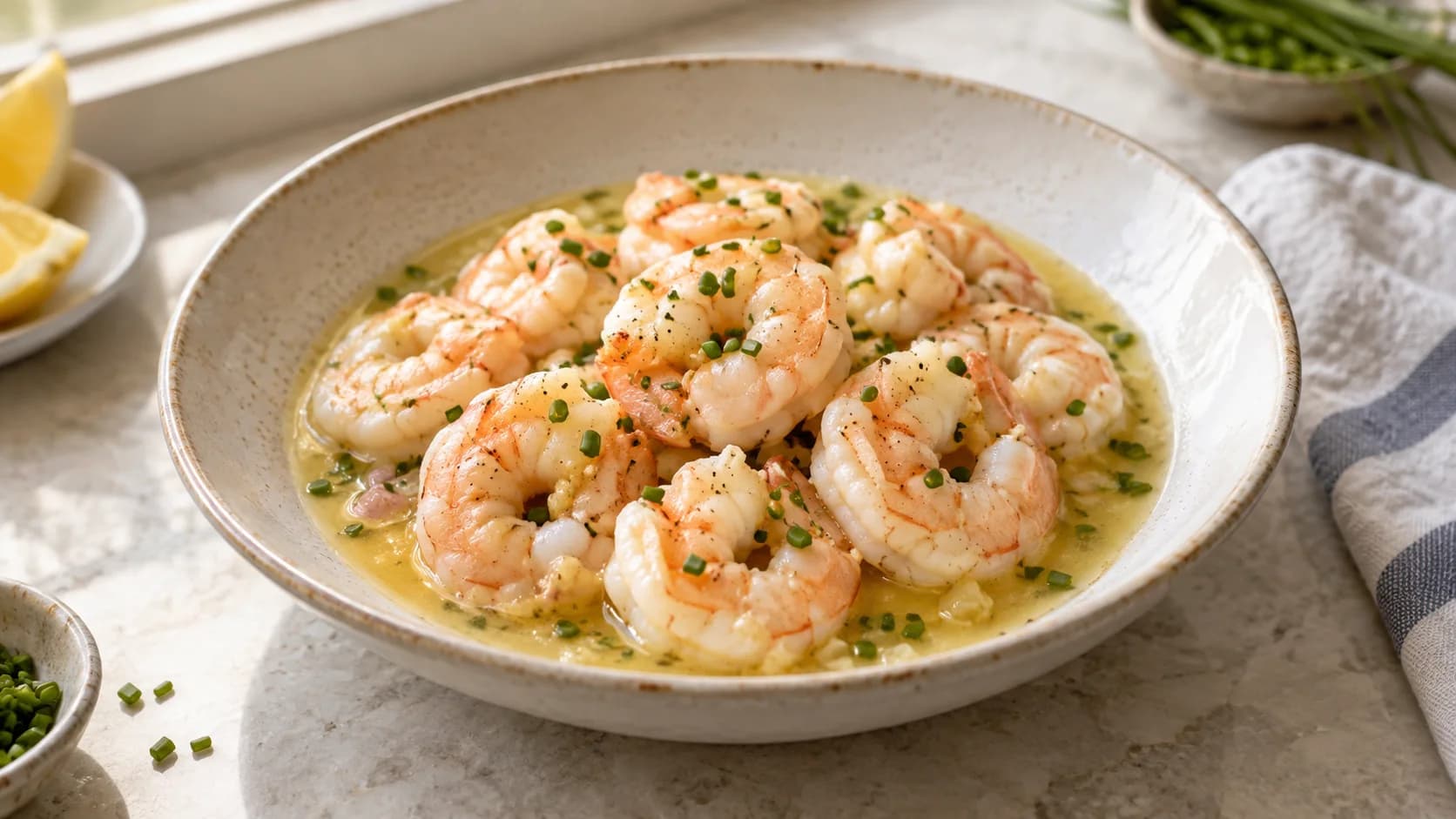
SPECIES INTERSECTION
Which shrimp fit this method?
Now that the technique is explicit, species fit has context. Good matches provide enough size, structure, or handling margin for this method; watch and avoid states stay visible.
No avoid state recorded.
PRODUCT INTERSECTION
Real bags that fit
These catalogue products clear the method recommendation. Product processing still has the final say, so each bag opens into its own full verdict.
PROCESSING INTERSECTION
Processing can change the answer
A species can be a good fit while a specific bag is not. These processing states are the ones the recommendation engine treats as relevant to this method.
Hardness is an integral of time at temperature, and cook loss, shrinkage and hardness correlate at 97.8, 92.3 and 88.4 percent. Every reheat moves further up the same monotonic curve and nothing re-hydrates. The only technical route back is very prolonged braising, which softens via collagen-to-gelatin at the cost of everything else. DIRECT ANSWER to the brief's question: for a precooked salad-shrimp bag, Group B membership no longer decides anything about METHOD - R15 has decided all eight cells. What group membership still decides is flavour framing (what to dress it with) and the purchasing lesson (that raw-grade amaebi is a different product on the same shelf). Therefore the Use block must ask what STATE the bag is in BEFORE it asks what species it is.
WHY IT WORKS
The cooking logic underneath the method
The method page should teach a cook how to execute first. The science belongs here to explain the result, not to replace the methodology.
Butter poach, explained
A lower-temperature fat bath reduces the surface-to-center gradient and avoids washing water-soluble flavor into a discarded cooking liquid. The method's advantage is temperature control, not a long cook.