
Dry and season
Thaw completely if frozen. Pat the shrimp very dry and season lightly with about 3/4 teaspoon salt while you build the butter emulsion.
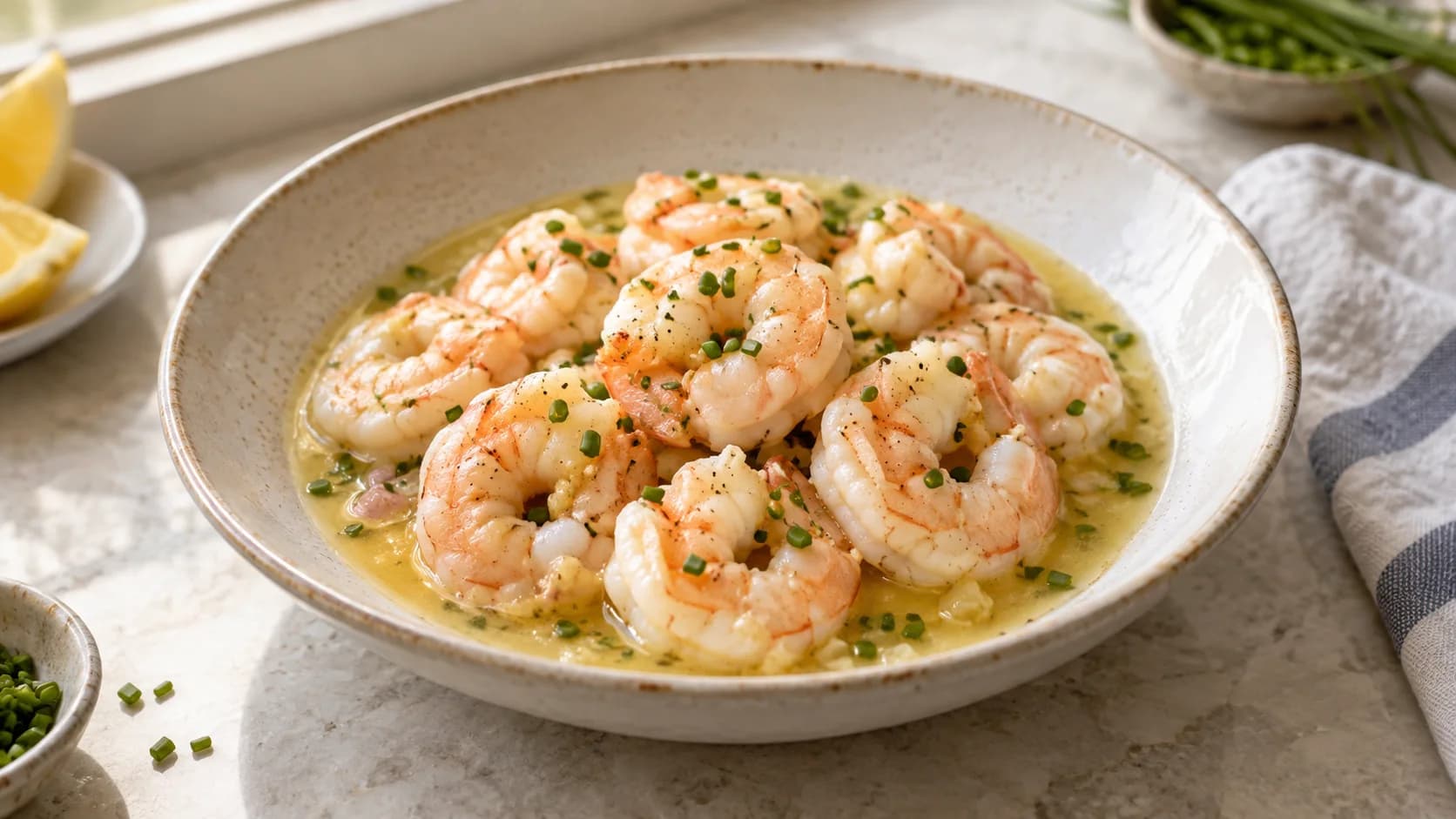
A low-temperature butter emulsion turns large sweet shrimp glossy and tender. This is precision over sizzle: hold the butter below frying temperature and let the shrimp finish gently.
Jump to RecipeAI-generated serving illustration. It is not a photograph of a tested batch or a doneness reference.
Thaw completely if frozen. Pat the shrimp very dry and season lightly with about 3/4 teaspoon salt while you build the butter emulsion.
Add the water to a wide skillet and bring it just to a simmer. Lower the heat. Whisk in the cold butter a few cubes at a time, adding the next cubes only after the previous ones emulsify. The sauce should look creamy and glossy, never oily.
Add the smashed garlic, lemon peel and tarragon. Hold the butter around 160 to 170°F / 71 to 77°C. It should steam gently but never bubble hard enough to fry.
Lay the shrimp in one uncrowded layer. Poach gently, turning once, for about 2 to 4 minutes depending on size, until the centers are just opaque and the bodies still hold a relaxed curve.
Transfer the shrimp to a warm plate the moment they are done. Delicate Royal Red and Argentine Red shrimp can overshoot quickly, so use the center texture rather than shell color as your clock.
Take the skillet off the heat. Remove the aromatics, stir in lemon juice and chives, season with black pepper and the remaining salt as needed, then spoon the warm butter over the shrimp. Serve immediately with bread or rice to catch the sauce.
OPTIONAL UPGRADE
Keep the core recipe clean, or flip this on for one or two high-impact upgrades.
Use these recipe-specific texture cues. Color and curl alone cannot establish safety; use a thermometer to check 145°F / 63°C at the thickest part for cooked shrimp.
The little details that make a big difference.
Butter poaching works because the cooking medium stays well below frying temperature. A thermometer is more useful here than a timer.
Royal Red and Argentine Red shrimp can be red while raw. Judge doneness by opacity and texture, not by the usual gray-to-pink change.
Cold butter whisked gradually into a small amount of water creates a stable beurre monté that coats the shrimp instead of frying it.
16/20 or larger shrimp change temperature more slowly, giving you a wider window to pull them before the center overshoots.